Carbohydrate during long sessions: spread your intake instead of leaving it until the end
Turn an individual target into timing, portions and a fueling plan you can carry out.
Disclosure: this article contains True affiliate links. Enduran-se may earn a commission on purchases made through these links. Code: TRUEVICTORMATHOS, subject to store terms.
Carrying a gel is different from having a fueling plan. With the first, you know what is in your pocket. With the second, you know when you intend to eat, where water will be available and how you will adjust if the route takes longer.
Set the target before counting packets
Start with an hourly carbohydrate amount appropriate for duration, intensity and individual tolerance. Then translate that target into products or foods. Do not assume one packet per hour suits every session.
Consider a purely mathematical example: an athlete has already received advice to consume 50 g per hour over two hours. The planned total is 100 g. If each chosen unit supplies 25 g, four units add up to that total. This is neither a recommendation for everyone nor an instruction to exceed a particular product's labeled use.
Put the total on a timeline
Spread intake opportunities across the session rather than concentrating everything near the finish. Timing needs to fit the exercise: opening a packet on a technical climb or in a crowded section can be difficult. On the bike, use safe opportunities; when running, consider access to water stations.
If a drink supplies carbohydrate, include it in the total. A common mistake is planning gels while overlooking liquid fuel. Another is confusing a packet's total weight with its carbohydrate content.
Choose formats you can use
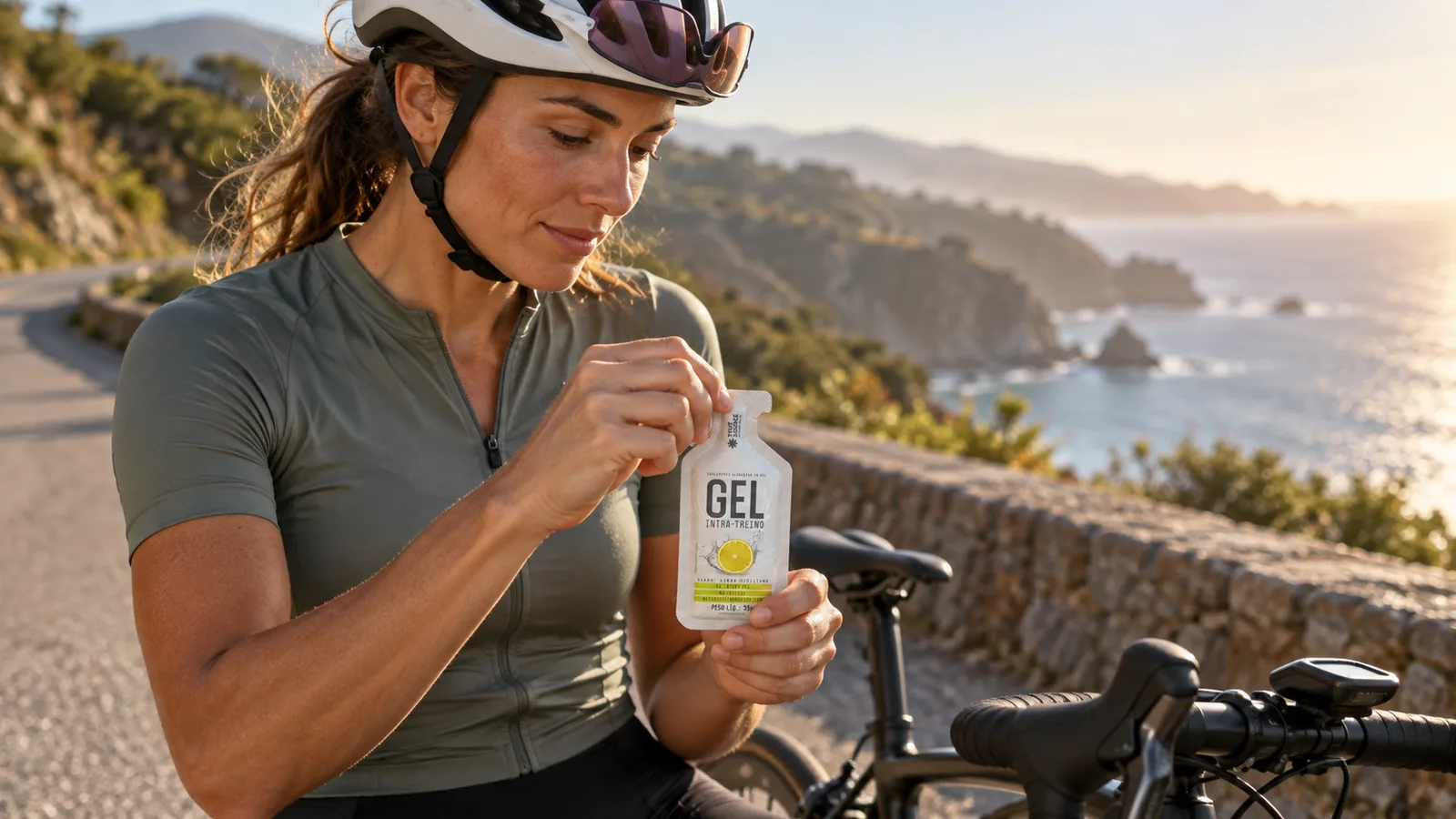
True Energy Gel Limão Siciliano lists 25 g of carbohydrate per packet on the page reviewed. That figure helps calculate its contribution; it does not establish it as the best choice for everyone. Always check the current label and directions.
Rehearse and record the outcome
During representative training, record timing, amounts, drinks, intensity and symptoms. If the strategy fails, the record helps distinguish excessive intake, access difficulties, insufficient fluids or exercise conditions that differed from expectations.
Do not attempt to compensate for a long period without eating by taking all the missed fuel at once. Use the experience to adjust the plan with your dietitian. The aim is a manageable, tolerable strategy before race day.
This guide addresses distribution. To identify the grams in each package, see the portal's article about reading carbohydrate labels.
Educational content for adults; it does not replace individual assessment and planning with a qualified professional.
References
- Thomas DT, Erdman KA, Burke LM. Nutrition and Athletic Performance. Medicine & Science in Sports & Exercise, 2016. DOI: 10.1249/MSS.0000000000000852.
- Mlinaric J, Mohorko N. Nutritional strategies for minimizing gastrointestinal symptoms during endurance exercise: systematic review of the literature. JISSN, 2025. DOI: 10.1080/15502783.2025.2529910.
 Cada um no seu ritmo. Juntos no caminho.