Triathlon transition: a checklist to change sports calmly
Organize your space, learn the routes and rehearse a transition sequence that fits your race rules.
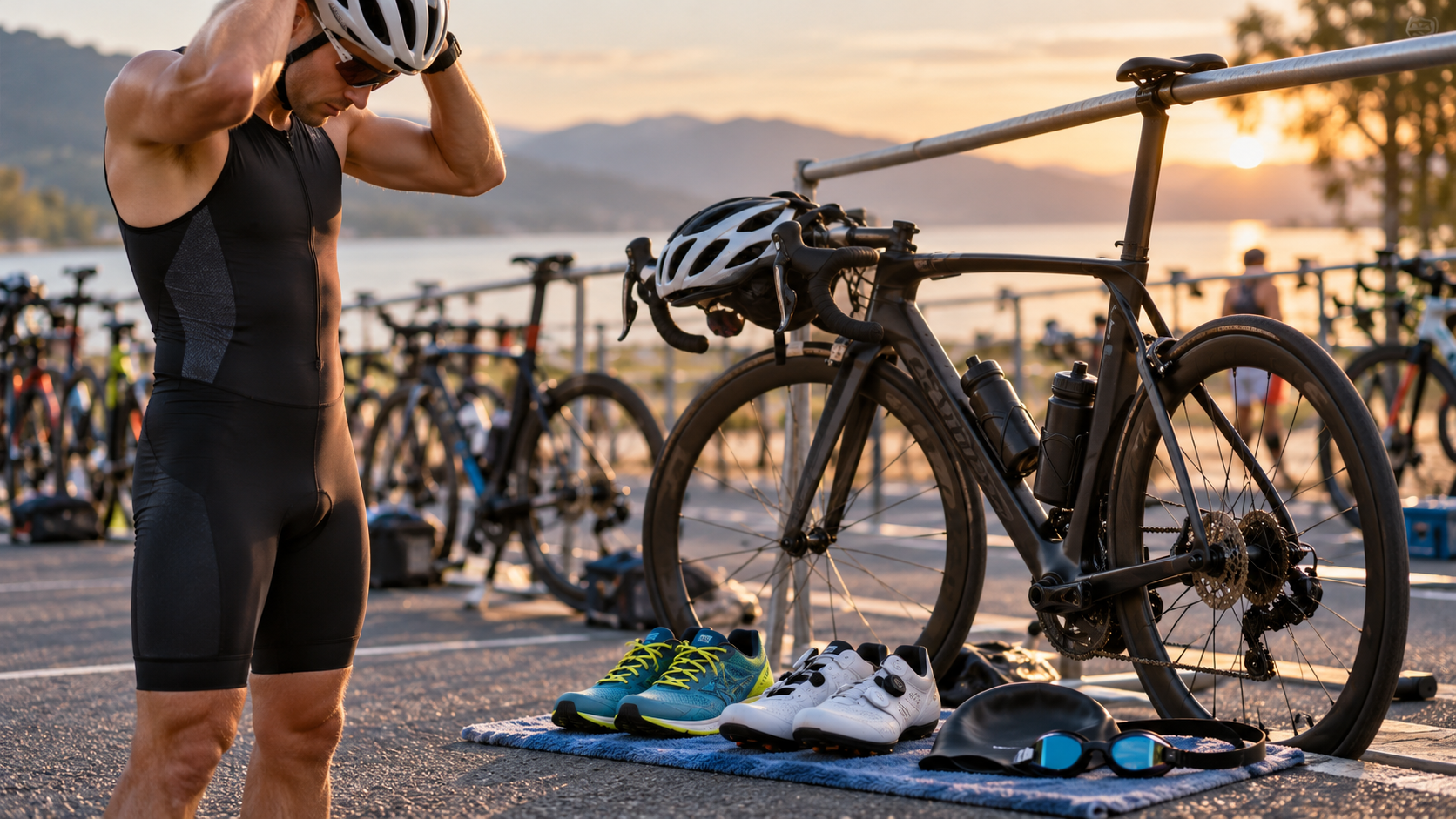
Transition looks like a break between sports, but it is also part of the race. It is where you find your bike, change equipment and need to know where to go next. For beginners, reducing doubts is usually a more useful goal than trying to save seconds with moves you have not mastered yet.
This guide suggests a way to organize and rehearse in advance. It does not replace the rules of your edition: schedules, permitted items and the layout of the area vary. The goal is to arrive knowing what your next action will be, including if something does not go as planned.
Before setting up your space
Read the athlete guide looking for operational information: transition opening and closing times, documents, bike identification, permitted equipment and mount and dismount points. Save this information on your phone and consider a simple paper copy if the venue has poor signal.
When you visit the venue, mentally walk four routes: from the swim exit to your spot; from your spot to the bike exit; from the bike finish to your spot; and from there to the run. Choose fixed landmarks, such as the rack row number. An eye-catching bike may disappear when its owner heads out to ride.
A space you understand
Lay out only what you actually plan to use. A huge towel and several optional accessories can take up someone else's space and create more decisions. Check the limit set by the organizers and keep your things within it.
Arrange your gear in the order you will use it. Helmet, sunglasses and cycling gear should be found without digging through the whole bag. Your running gear needs to remain accessible after the wet items come back. Do not leave wrappers or small parts scattered in the walkway.
Do a functional check: does the buckle close? Are your shoes in good condition? Is your race number legible? Has the bike been serviced? Finding a problem the day before still lets you look for help; finding it at the swim exit greatly reduces your options.
Rehearse a simple sequence
In a safe place, practice the order for putting on and taking off your own equipment. Start standing still. Then, if you have guidance and a suitable space, practice walking with the bike. You do not need to learn flying mounts to take part in a first triathlon.
A written sequence can help: find your spot, stow your swim gear, put on your cycling gear, check the buckle, take the bike and head to the exit. On the way back, return the bike to your spot, rack it, take off your cycling gear and get ready to run. Adjust the list to the event rules.
Rule reference: the IRONMAN Brazil rules consulted require a buckled helmet when handling the bike in the situations described and set specific mount and dismount lines. This shows why your sequence needs to include safety. Do not automatically apply every rule from that circuit to another competition.
Prepare for small surprises
If your sunglasses fall, stop somewhere that does not block the flow. If you cannot find your spot, look for the number and ask an official for directions. If you have a mechanical problem, follow the authorized assistance procedures. Rushing to fix things tends to increase the chance of getting in someone else's way.
Decide beforehand which items are essential and which can be left behind if they are hard to use. An optional accessory should not turn into an argument with yourself in the middle of the race. A failure in safety equipment, however, calls for stopping and assessing, even if it costs you the race.
Do one last walk-through
On race day, confirm whether the course or schedule changed and listen to the briefing. Count the rows from a permanent landmark, look at the signs and picture the sequence once more. Then leave your space tidy and head to the start with time to spare.
When you finish, write down one thing that worked and one that could be simplified. That note helps more than comparing your transition with an experienced athlete's. Your first good transition is the one where you understand the route, respect the people around you and move on to the next sport calmly.
References
- Regulamento — IRONMAN Brasil 2027 — Unlimited Sports · open (accessed on 2026-10-15)
 Cada um no seu ritmo. Juntos no caminho.