Discover how a story about ancient Greece inspired a modern Olympic race and a wider running tradition.
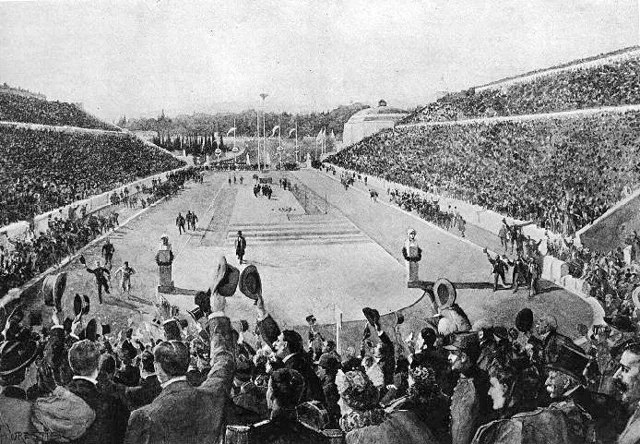
The modern Olympic marathon began at Athens 1896 over roughly 40 km, about 24.9 miles, inspired by the legend of the messenger Pheidippides. Greek runner Spyridon Louis won in 2:58:50. The modern 42.195 km, or 26 miles 385 yards, came from the London 1908 course and became the standard in 1921.
Marathon is a place in Greece associated with a battle between Greeks and Persians and with the familiar story of a messenger carrying news of victory to Athens. In English, the messenger is usually called Pheidippides. Popular accounts describe a run, an announcement and the runner's death, often presented as one uninterrupted episode.
In the familiar version, the messenger announces victory and dies after delivering the news. That is the legend behind the race, not an ancient result sheet. It does not establish a measured 42.195 km route or an official finishing time. The athletic distance was selected many centuries later, within organised modern sport, rather than recovered from a documented ancient course.
The modern race should not be described as an ancient Olympic discipline that was simply restarted. It belongs to the organisation of the revived Games in the late nineteenth century. Its connection with Greece was deliberately symbolic, linking a long-distance race to a recognisable story and landscape.
Think of inspiration and reproduction as different things. Naming the race after Marathon refers to a Greek story; closing roads, measuring a course and classifying competitors by elapsed time belong to modern athletics. The name points towards antiquity, while the race that allows competitors to compare performances was built with different institutions and practical arrangements.
Michel Bréal, a French linguist and scholar, played an important part in the proposal. World Athletics and the Association of International Marathons and Distance Races, or AIMS, describe his contribution to the idea of a race associated with the symbolic journey from Marathon to Athens. It became part of the project for the first modern Olympics.
The proposal fitted Athens because it connected the event with a place and a story spectators recognised. Finishing inside the Panathenaic Stadium made the end of the journey a shared public moment. This was more than adding another short race on a track: the route itself gave spectators a narrative to follow through the landscape around the revived Games.
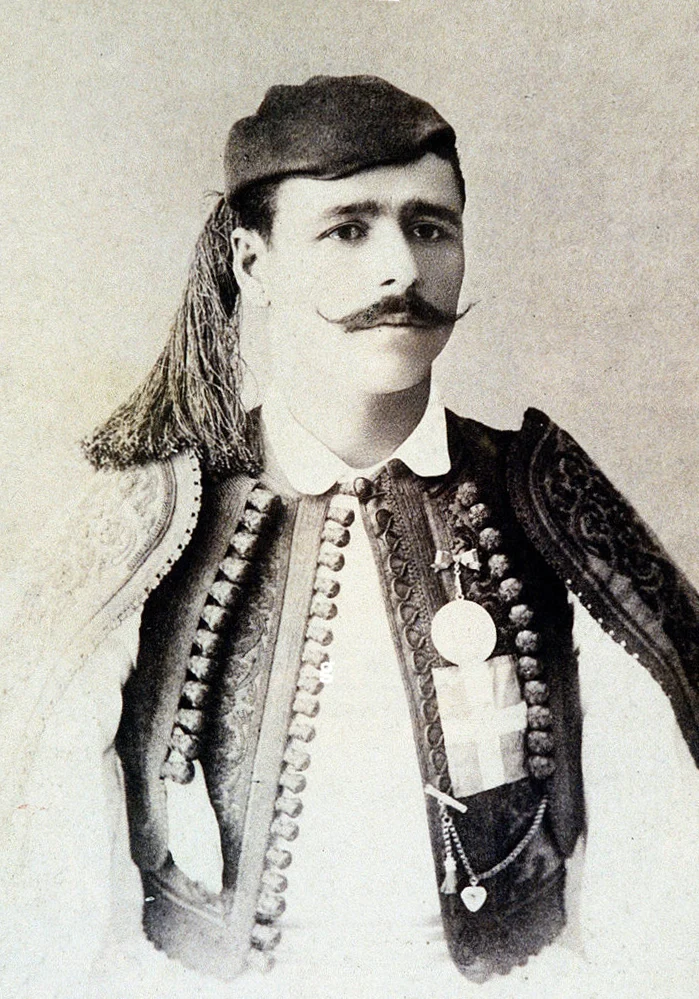
The Olympic marathon at Athens 1896 followed a course of approximately 40 km, or about 24.9 miles. Spyridon Louis won the men's event. These are established landmarks in the official sporting histories, but the course should not be retrospectively described as already matching the later standard of 42.195 km, approximately 26.2 miles.
Louis finished in 2:58:50. That recorded result should not be treated as a performance over the modern 42.195 km, or 26 miles 385 yards: the Athens route was about 40 km, roughly 24.9 miles. A meaningful comparison requires the course length as well as the clock. Surface and conditions also help explain why two finishing times are not complete descriptions of two races.
The modern measurement did not come from a precisely documented messenger's journey. The London Olympic course of 1908 became an important reference, and World Athletics records the standardisation of 42.195 km in 1921. In imperial units, that is 26 miles and 385 yards; 26.2 miles is a convenient rounded description.
The London race started at Windsor Castle and finished at White City Stadium in front of the royal box. The resulting course measured 26 miles and 385 yards, equivalent to the official 42.195 km. International adoption in 1921 turned that particular measurement into the shared reference. It did not establish the precise length of a run made by an ancient messenger.
| Historical landmark | What it explains |
|---|---|
| The messenger narrative | The race's cultural inspiration and name |
| Athens 1896 | The marathon in the revived Olympic programme |
| London 1908 | The course associated with the later standard |
| Standardisation in 1921 | Adoption of 42.195 km, or 26 miles 385 yards |
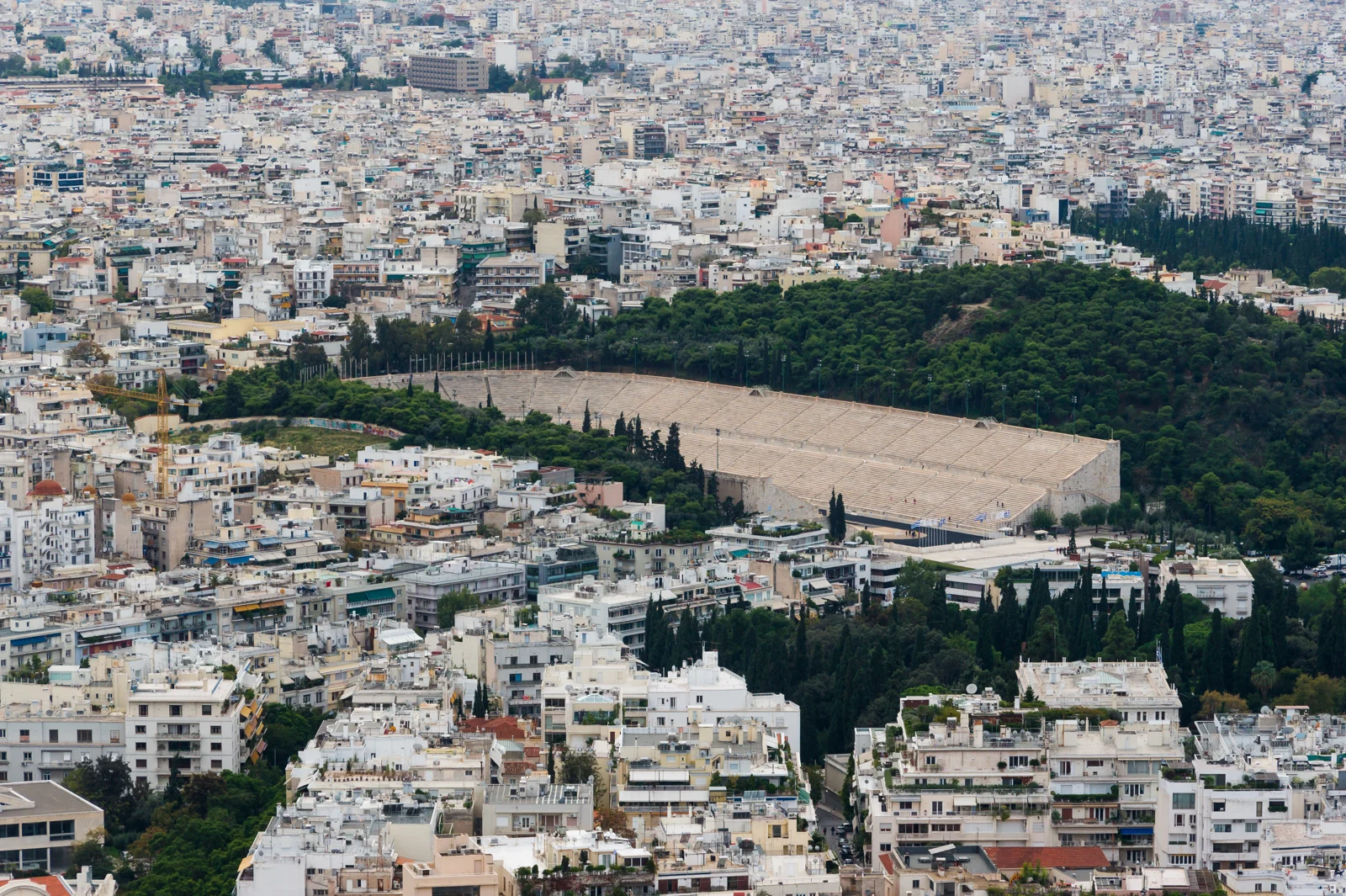
The event did not remain confined to the Games. The Boston Athletic Association dates its first Boston Marathon to 1897. Races developing their own courses, local traditions and relationships with spectators helped give the marathon an identity beyond an Olympic programme. Each event could become connected with a particular place.
That development helps explain the calendar runners recognise: a shared distance can belong to very different cities and local traditions. Boston and New York are both marathons, yet their routes and histories are distinct. Reading about each event adds useful detail to the general origin story. For someone choosing a first trip to race, the character of the city can matter alongside the distance.
No. The women's marathon entered the Olympic programme at Los Angeles 1984, when Joan Benoit won the inaugural title. World Athletics and Olympic sources document that milestone. It marks Olympic inclusion, not the beginning of women running marathons. Confusing those statements would erase participation that preceded official recognition on that stage.
Benoit won in 2:24:52, as recorded by World Athletics. There were 88 years between the first men’s Olympic marathon in Athens and the first women’s Olympic marathon in Los Angeles. That gap does not mean women were absent from marathon running throughout those years. It shows how long the Olympic programme took to include a women’s race at the distance.
It places a familiar distance within a wider context. The kilometres have a history, individual races have their own identities and participation did not expand equally for everyone. Understanding those developments can enrich the experience of following or choosing a race, without turning the marathon into an obligatory achievement for every runner.
A pace calculation makes the scale tangible. Covering 42.195 km, approximately 26.2 miles, at 6 minutes per kilometre, about 9:39 per mile, takes around 4:13:10. At 7 minutes per kilometre, about 11:16 per mile, it takes around 4:55:22. Those are constant-pace examples, not population averages or training targets. The dedicated distance guide explores the measurement, while individual race guides explain the cities and courses.
 Everyone at their own pace. Together along the way.