Understand cycling disciplines and learn how a race format differs from a terrain description or bicycle category.
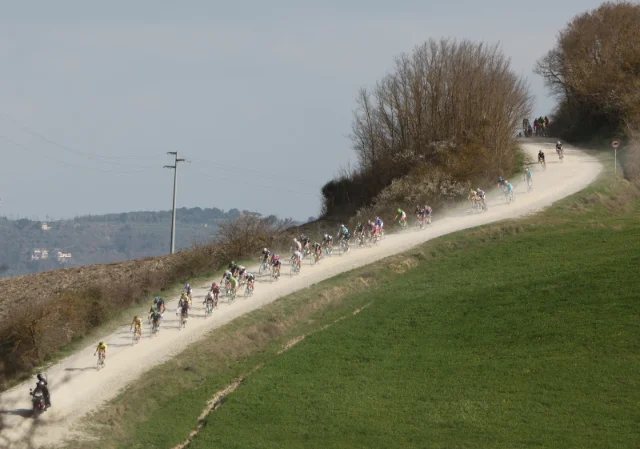
Road, mountain bike, gravel and track cycling differ in terrain and competition: paved roads, trails, mixed surfaces and velodromes. A time trial is a race against the clock that can sit within road cycling, while cycle touring means travelling by bicycle. Separating the setting, the purpose and the equipment makes the terminology easier to understand.
No. Road cycling is a discipline, while a time trial is a competitive format that can sit within it. A time-trial bicycle is equipment designed for particular uses. Treating those terms as equivalent can make it seem as though every bicycle category represents a completely separate sport with one fixed set of rules.
Consider one person riding to explore towns and another sprinting for a finish within a racing bunch. Both might use road bicycles, yet their activities differ. A trip can also cross paved and unpaved ground without becoming two competitive disciplines. The purpose of the ride explains more than the equipment label alone, especially when someone is choosing how to begin.
| Term | What it mainly describes | A useful distinction |
|---|---|---|
| Road | A discipline associated with road courses | Bunch racing versus racing against the clock |
| Mountain bike | A discipline with several off-road formats | Circuits, marathon events and downhill formats |
| Gravel | Riding and racing across mixed, often unpaved surfaces | Course demands and event-specific requirements |
| Track | Cycling on a velodrome | Sprint and endurance events |
| Time trial | A competitive format based on elapsed time | Individual versus team racing |
| Cycle touring | A way of travelling and exploring by bicycle | Route, luggage and support arrangements |
The UCI describes several types of road competition, including one-day races and stage races. A bunch-start event brings riders together on the course, while a time trial compares their elapsed times under a different start structure. These are related forms of racing, rather than a single competition repeated on different roads.
A one-day race settles its main result that day. In stage racing, times from successive days contribute to an overall classification, alongside separate competitions. Winning a stage does not automatically mean leading the entire race. That explains why the rider celebrated at one finish can differ from the rider at the top of the accumulated standings. They are winning different parts of the event.
In an individual time trial, competitors race a course against the clock with separately organised starts. Team formats also exist. The order in which riders cross the line at a particular moment does not necessarily match the final ranking, because they did not all begin together. Elapsed time provides the relevant comparison.
Imagine two cyclists on a hypothetical 20 km course, about 12.4 miles. One starts at 8:00 and finishes at 8:40; the other starts at 8:01 and finishes at 8:39. The second has the faster elapsed time: 38 minutes rather than 40. Their average speeds are about 31.6 and 30 km/h, or 19.6 and 18.6 mph. These are worked calculations, not typical amateur results.
In everyday language, mountain biking may describe a bicycle or an off-road activity. Competitive use requires a more specific format. Cross-country, marathon mountain biking, downhill and enduro organise terrain and timing in different ways. They should not be understood as interchangeable names for one race with one type of result.
Cross-country combines climbs, descents and technical riding across repeated circuit laps. Mountain-bike marathon extends the course; it does not mean running’s 42.195 km, or 26 miles 385 yards. Downhill focuses on a timed descent. Enduro adds the times of competitive stages linked by transfer sections. UCI descriptions show why riders can all use the term MTB while tackling very different sporting tasks.
Gravel is associated with routes that can combine surfaces and often include substantial unpaved sections. The term is also used for bicycles and a wider culture of exploration. This flexibility helps explain its popularity, but means one photograph cannot describe an entire course. Two gravel events may place quite different demands on participants.
Imagine a 40 km route, about 24.9 miles, comprising 25 km of unpaved road and 15 km of tarmac, roughly 15.5 and 9.3 miles. It illustrates mixed surfaces rather than a compulsory ratio. Loose gravel, firm dirt and larger stones offer different experiences. A gravel bicycle commonly combines drop handlebars with clearance for wider tyres than a race-oriented road bicycle, reflecting that broader range of surfaces.
Track cycling takes place on velodromes and includes a range of competitions. Some emphasise sprinting, while others involve endurance, positioning and particular scoring systems. To an unfamiliar viewer, the riders may appear to be doing similar laps, but the purpose of each event determines how a winner is decided.
A sprint event centres on short efforts and positioning, while a points race can reward intermediate sprints. A purpose-built track bicycle has a fixed gear and no brakes, unlike an ordinary road bicycle. The banked velodrome and its riding conventions are part of that setting. A similar-looking frame does not make the two bicycles interchangeable, and the facility is more than a small circular road course.
Cycling extends beyond the forms most often encountered in recreational road groups. The UCI lists disciplines including cyclo-cross, BMX and trials. These have their own identities and should not all be squeezed into a choice between road and mountain biking. Surface is useful context, but it does not explain an entire competitive discipline.
Cyclo-cross can include sections where riders dismount to negotiate obstacles. BMX racing uses a course with jumps and corners to decide a race, while BMX freestyle emphasises tricks. Trials involves negotiating obstacles through bicycle control. These examples explain why several activities away from paved roads do not all belong to one format: their objectives and methods of deciding results are different.
Not every cycling activity needs a competitive classification. Cycle touring describes travel by bicycle, while bikepacking is often associated with luggage arrangements and the character of a trip. The terms can overlap. A rider does not have to force every personal experience into a rigid category in order to describe it clearly.
Describe a particular ride before choosing equipment. Do you want 30 km on paved roads with friends, about 18.6 miles; 20 km of rural tracks, about 12.4 miles; or a trip carrying luggage? Distance, surface and support help clarify the choice. For competition, check the organiser’s and governing federation’s rules, such as the UCI’s, once for equipment and format requirements. Individual guides explore road, MTB, gravel and touring in more detail.
 Everyone at their own pace. Together along the way.